



RUSALKA -xa0An Introduction
by George Fleetonxa0©xa02013
[caption id="attachment_32481" align="alignleft" width="150"]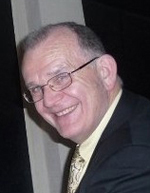 George Fleeton[/caption]
On September 20 I was invited to give the pre-performance Talk, at Lyric Opera Productions’ second night of Dvořák’s 1901 Czech operaxa0Rusalka, in the Gaiety Theatre Dublin.
This is an extended version of that Talk, written as an Introduction to this opera.
George Fleeton[/caption]
On September 20 I was invited to give the pre-performance Talk, at Lyric Opera Productions’ second night of Dvořák’s 1901 Czech operaxa0Rusalka, in the Gaiety Theatre Dublin.
This is an extended version of that Talk, written as an Introduction to this opera.***
Rusalkaxa0was a very rare event in the history of opera productions in Dublin, on what was also Culture Night 2013, as we believe it had never previously been staged there.
Antonίn Dvořák took seven months, in 1900, to write the score ofxa0Rusalkaxa0and he didn’t make a single alteration to Jaroslav Kvapil’s libretto.
Acts 1 and 3 are set in a forest glade on the edge of a lake: this is Rusalka’s domain, between two worlds, with its witch, its goblinxa0and the wood-sprites.
Act 2 is set in a completely different place: wedding preparations at the castle of a Prince – a new worldxa0xa0xa0 of mortals, foreign and alien to Rusalka, the water nymph.
And because of her Faustian pact with the witch Ježibaba, Rusalka is mute, cannot speak, cannot sing.
The Czech language has mellifluous speech rhythms, and thisxa0opera’s libretto exploits these, with lots of alliterative poetry, in verses which almost sing themselves.
The diphthongxa0ouxa0(the only one in the Czech language) predominates in the libretto, and we are introduced to the sound world ofxa0Rusalkaxa0in the opening phrases -xa0Hou, Hou, Houxa0- of the three Wood Sprites.
The libretto, and the music, is continuous – through-composed, endless melody – yet each Act easily divides into five lyrical scenes.
In an early scene (from Act 1), in the opera’s most famous song, Rusalka asks the moon to shine on her Prince and to tell him in his dreams that she is waiting for him
In the opening phrase,xa0mĕsíčkuxa0meansxa0‘littlexa0moon’ and, in Rusalka’s serenade to the moon, glissando strings dominate, conveying the atmosphere of moon on water
An unusual but unifying feature of Czech, by the way, is that all words in the language have their stress on the first syllable – no exceptions; so we say RU-sal-ka, DVOŘ-ák, and so on
Rusalka and her old world are generally good-natured, and we sense that the composer’s sympathies lie entirely with them.
The humans of Rusalka’s new world (Act 2) are more selfish and disdainful, and so the music of the Prince and the Foreign Princess is largely conventional, indeed a lot of it is ‘spoken melody’, which itself grows freely out of the depth and breadth of Bohemian folk songs.
This is particularly truexa0of the short ballet, and the chorusxa0‘White blossoms along the road’xa0which follows it, in Act 2.
Only in the love duetxa0(at the very end of Act 3) do these two worlds overlap, coalesce and fade away into oblivion, as the Prince dies and Rusalka sings, as she fades back into eternity:
For your love, for your beauty,
For your inconstant human passion,
For everything which condemned me to my fate,
May God have mercy on your human soul!
Exactly two months before he died – in an interview with a Viennese newspaper – Dvořák said
xa0“Over the past five yearsxa0(of his life)xa0I have written nothing but operasxa0(in fact only the final three of ten – the other seven were written between 1870 and 1888).
I wanted to devote all my powers … to the creation of opera… simply for the reason that I consider opera to be the most suitable medium for thexa0(Czech)nation.
The broad masses listen to this music and very frequently…
(Others)xa0look upon me as a symphonist, yet I have proved many years ago that my overwhelming urge lies in the direction of dramatic creation”xa0 (i.e. works for the stage, as distinct from about 150 other compositions, his ‘absolute music’ written for orchestra, chamber ensembles and piano).
Yet for all the imagination that makes this opera so intriguing, Dvořák is the weak link in the short historical chain of Czech opera which stretched from Smetana in 1866 to Janáček in 1930.
He was not a born dramatist.
His insecurity and lack of critical judgement over the choice of libretti contrast sharply with the decisiveness of born opera composers such as Mozart, Wagner and Verdi.
Opera was an unfortunate obsession for Dvorak: his most cherished ambition was to become a composer of operas of international repute, but he had little feel for the theatre, or the stage as a platform for make-believe.
However,xa0Rusalkaxa0which is convincingly dramatic, deeply felt, organic, is the exception (if only because the other nine libretti, which he was offered, were dramatically inept and imaginatively inadequate, nondescript even as ‘local product for a local market’).
They were far from resoundingly successful, and he couldn’t make them work, even after time-consuming revisions.
(How many of us, for example, can recite the titles of Dvořák’s ten operas – in their chronological order?
Time, to find his operatic feet, was also lost to conducting and teaching assignments in England and in New York respectively.
So it’s little wonder that his operatic output was and remains controversial.
Today we actually know Dvořák better for his final, 9thxa0Symphony (‘From the New World’), for the Slavonic Dances, and for his Cello Concerto – and this one opera – in all of which his sound world is inhabited by the melodic shapes and cadences of Bohemian folk music and its colours, forms and fables
For he was essentially a melodist, writing melodies where tune and rhythm were inseparable, drawing from a well of melody which never seemed to run dry – he was the self-styled ‘simple Bohemian musician’, inspired by his great friendship with Brahms and by the culture of the Czech lands, albeit under Viennese occupation.
Andxa0to his immense credit, Dvořák nourished the wider European cultural establishment with the vitamins of Czech folk music and the intonations and inflections of the Czech language.
European opera is dominated by the Italians, French and Germans.
Onlyxa0with the drift towards musical nationalism did central European composers begin using opera to explore and assert national identity, taking as inspiration their respective regional folk legends.
And only then did we get to hear and to see, opera in Czech, and in Russian, though very rarely in Ireland.
So Czech opera was not driven by the same imperatives or tastes as Italian opera.
The musicxa0in this opera,xa0Rusalka, tends to be symphonic, the ideas are taken from the rhythms, inflections and melodic shapes of Bohemian folklore, its polkas and traditional music, and so to our ears it should sound fresh and extrovert.
Although Puccinian melancholy and nostalgiaxa0are laced throughxa0Rusalka, it was the literate poetry of Kvapil’s text that underpinned the exceptional qualities of this opera, which remains much more than a ‘lyrical fairy tale’ for grown-ups.
In that respectxa0Rusalkaxa0can even stand apart from the operas of Smetana which preceded it (e.g.xa0Hubicka/The Kiss, a village opera, which we saw in Wexford three years ago), and those of Janacek, which came after it, starting withxa0Jenůfawhich appeared in the year Dvořák died.
These two composers may well take precedence over Dvořák both in the field of opera and in intellect and spirituality, but he surpassed them in his ability to think exclusively in terms of sound, as inxa0Rusalka.
However hexa0was let down in his other operas because the characters were not interesting, the subject matter was not gripping and the dramatic, on-stage structures were not very accomplished.
Andxa0yetxa0 nowhere else in European opera do these three great composers, taken together, better exemplify Vaughan Williams’ contention thatxa0‘music shares in preserving the identity of the soul of the individual and of the nation.’
Two books of interest:xa0Dvořákxa0by Hans-Hubert Schönzeler (Marion Boyars, 1984); andxa0Dvořákxa0by Kurt Honolka (Haus, 2004).
The Bohemian surname Dvořák means ‘man from a farm’, and it is still very common in the new Czech Republic.
There will axa0celebration Gala Concert for Verdi’s bicentenary, in the National Concert Hall Dublin on October 16thxa0at 8pm, also produced and presented by Lyric Opera Productions:
for details see: xa0www.lyricoperaproductions.com
]]>